Back or chest hair can make grooming a hassle. Shaving leaves stubble within days, and some spots are hard to reach. Men who want smoother skin without constant trimming can try waxing.
The first appointment raises practical questions, though. How much hair comes off? Does it hurt? How should you prepare?
This guide covers men’s waxing for the back and chest. Keep reading to explore the treatment steps, skin precautions, and aftercare.
About Men’s Waxing
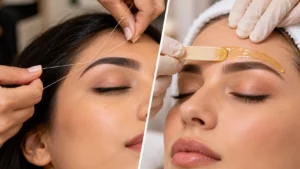
Men’s waxing removes unwanted body hair from the root with soft or hard wax. A specialist applies wax to manageable sections and removes it using the right technique. Shaving cuts hair at the surface. Waxing can leave treated areas smoother for several weeks.
Waxing is temporary, not permanent hair removal. Results depend on your growth cycle, hair thickness, and the area treated. It doesn’t promise that future hair will grow back thinner. It also doesn’t mean every hair will come out in one session.
What Is Included in Back and Chest Waxing?
Coverage differs between providers, so confirm the exact boundaries before your appointment. A full-back service and a chest service aren’t always the same as full-torso waxing.
Full Back Waxing
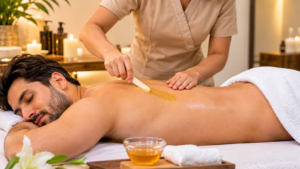
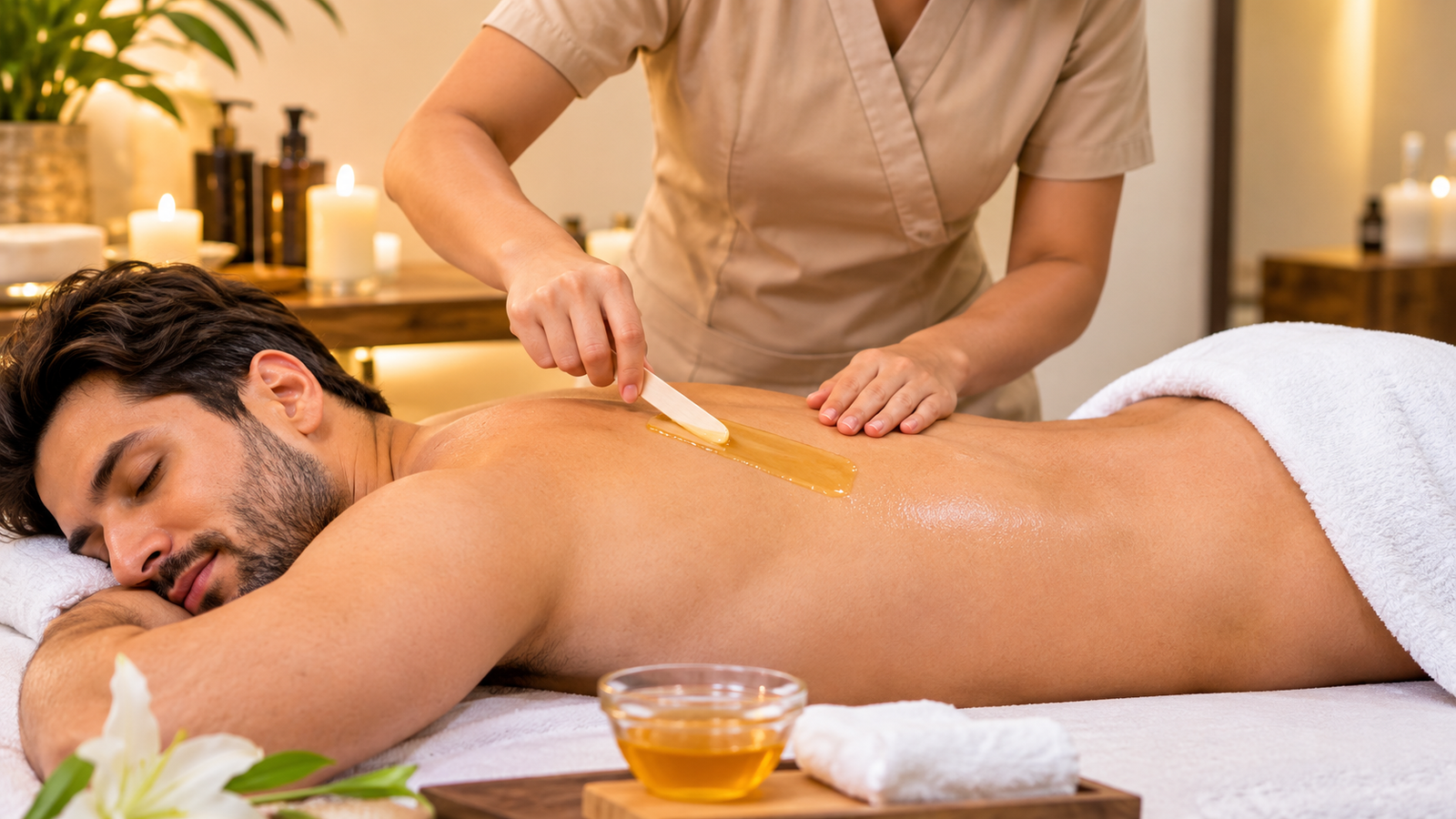
Full-back waxing usually targets unwanted hair across the upper, middle, and lower back. Depending on the provider, shoulders or the back of the neck may need separate treatment. You can’t easily reach your own back. Professional application can help achieve more even coverage than home shaving.
Chest Waxing
Chest waxing removes hair from the chest area, including around the pectoral muscles. Some men want complete removal. Others want less hair without going fully bare. Ask whether the service includes the upper abdomen or stomach since these areas may be priced separately.
Shoulders and Stomach
Hair often carries on past the chest or back. Shoulder, upper-arm, and stomach waxing may be separate services. Tell the specialist which areas bother you. The treatment plan and cost should be clear before any work starts.
How Should You Prepare for Your First Appointment?
Good preparation helps the wax grip the hair and reduces avoidable irritation. You don’t need an elaborate skincare routine, but a few details do matter.
Allow Enough Hair Growth
Hair should usually be about one-quarter inch long, or a little longer, so it can be removed well. Avoid shaving immediately before the appointment. If hair is very long, ask whether you need to trim it rather than cutting it too short yourself.
Arrive With Clean Skin
Shower beforehand when possible and skip heavy lotions or oils on the treatment area. Wear loose clothes that won’t rub against freshly waxed skin. Tell your specialist about allergies, past reactions, and any recent skin procedures.
Check Skin and Medication Risks
Postpone waxing over sunburn, broken skin, or significant irritation. Mention prescription acne treatments and topical retinoids, especially if you use them on the area being treated. Don’t wax while you’re on isotretinoin or for 6 months after you stop. Consult your dermatologist about any uncertainty.
What Happens During a Back or Chest Wax?
Knowing the order of an appointment makes a first visit less scary. The exact technique depends on your skin, your hair, and the wax used.
- Consultation: Confirm the treatment areas, the coverage you want, and any sensitivities.
- Preparation: The specialist cleans and prepares the skin before applying wax.
- Application: Wax goes on in sections that suit the way the hair grows.
- Removal: The wax comes off and pulls the hair out from the root.
- Finishing: Any visible hairs left may be dealt with. Then you get aftercare advice.
Does Men’s Waxing Hurt?
Expect a short pulling or stinging feeling as the hair comes out. Thick chest hair or a first back wax may feel uncomfortable. Pain varies a lot between people. Ask for a pause if you need one. Professional treatment should not be described as painless, and persistent severe pain is not normal.
What Should You Do After Waxing?
Short-term redness, tenderness, or small bumps can show up. Most mild reactions settle. Good aftercare helps you avoid extra irritation.
- Avoid Heat: Skip hot baths, saunas, and steam rooms for about 24 hours.
- Limit Friction: Avoid tight shirts, heavy sweating, and hard workouts at first.
- Use Gentle Products: Skip scented lotions and harsh exfoliants until your skin settles.
- Do Not Pick: Leave irritated follicles and ingrown hairs alone.
- Watch for Symptoms: Seek medical advice for worsening pain, spreading redness, or pus.
How Long Will the Results Last?
Many people get smoother skin for about 3 to 6 weeks, although regrowth varies. Back and chest hair may grow at different rates. Maintenance appointments depend on personal preference and whether enough hair has returned for the wax to grip
Conclusion
You can’t reach every part of your back with a razor. Uneven patches and missed hair make the results frustrating. Professional back waxing clears hair from spots that are hard to groom yourself. It works for men who want a cleaner, more even look.
Apsara Day Spa, the best Spa in Catonsville, MD, offers professional full-back waxing and other body waxing for men. You might be getting ready for a beach holiday or a fitness competition. Or you may just like a well-groomed look. Either way, our team can help you plan a treatment around your grooming preferences.
Skip the awkward angles and missed patches. Visit Apsara Day Spa to book your back waxing appointment. Thinking about chest waxing too? Contact our team to check availability and book.